PEPTIDE PURITY TESTING
HPLC for peptide purity testing: systems, columns and methods.
Purity is the first number on every peptide COA, and it comes from an HPLC. Here is how the test works, the setup labs use for semaglutide, tirzepatide, BPC-157 and the rest, and which refurbished HPLC to buy.
How it works
How HPLC measures peptide purity.
Reversed-phase HPLC pushes the dissolved sample through a column packed with C18-bonded silica. A gradient of water and acetonitrile, both with about 0.1% trifluoroacetic acid (TFA), washes the peptide and its impurities off the column at different times. A UV detector set at 210 to 220 nm, where every peptide bond absorbs, records each one as a peak.
Purity is the main peak's area as a percent of all peak areas. Truncated and deletion sequences, oxidized forms and leftover protecting groups show up as the smaller peaks around it.
Purity is not content
Purity says how clean the peptide is. Net peptide content says how much of the powder is peptide at all, since water and counter-ions such as TFA or acetate make up the rest. It is measured on the same HPLC against a weighed reference standard, and it is how a lab checks the milligrams on the label.
A typical starting setup.
| Setting | Typical starting point |
|---|---|
| Column | Reversed-phase C18 (C8 for very hydrophobic peptides) |
| Pore size | 100 to 130 � |
| Mobile phase A | Water with 0.05 to 0.1% TFA |
| Mobile phase B | Acetonitrile with 0.05 to 0.1% TFA |
| Gradient | Shallow, about 1% B per minute across the peptide's window |
| Detection | UV at 210 to 220 nm; a PDA records the full spectrum |
| Quantity | Area percent for purity; a reference standard for net content |
These are starting points. Each lab sets up and checks its own method for each peptide.
Buying guide
Which HPLC to buy for peptides.
- Detector. A UV or variable-wavelength detector is enough for purity. A PDA or DAD records the whole spectrum for peak-purity checks, and most QC labs choose one.
- Pump. A binary pump gives the sharpest, most repeatable gradients. A quaternary pump works too and mixes more solvents.
- HPLC or UHPLC. UHPLC (Waters ACQUITY, Agilent 1290) runs sub-2 µm columns for faster runs and better separation of close impurities. HPLC (Waters Alliance, Agilent 1100, 1200 and 1260) costs less to run and is plenty for routine purity.
- Autosampler. A cooled autosampler keeps samples stable through long overnight queues.
- Software. Waters Empower and Agilent OpenLab or ChemStation are what QC labs and auditors know.
In stock
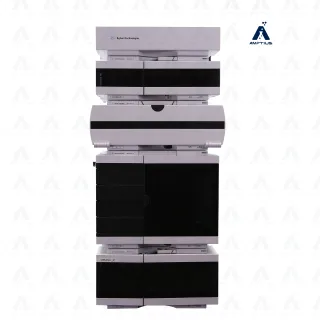
HPLC systems for peptide purity, in stock.
Tested in our in-house lab before it ships, with a 6-month warranty on parts and labor.
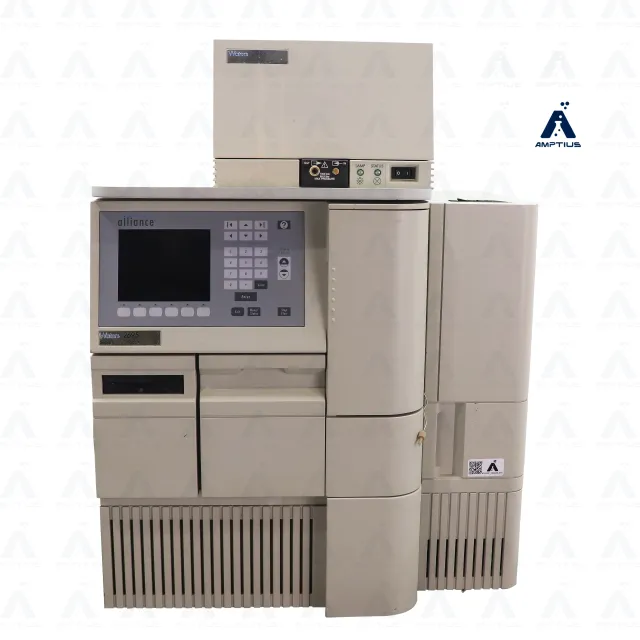 Waters Alliance 2695 HPLC System with 2996 PDA Detector
Waters
Available
Fully Tested and Refurbished
Available
$8,500.00
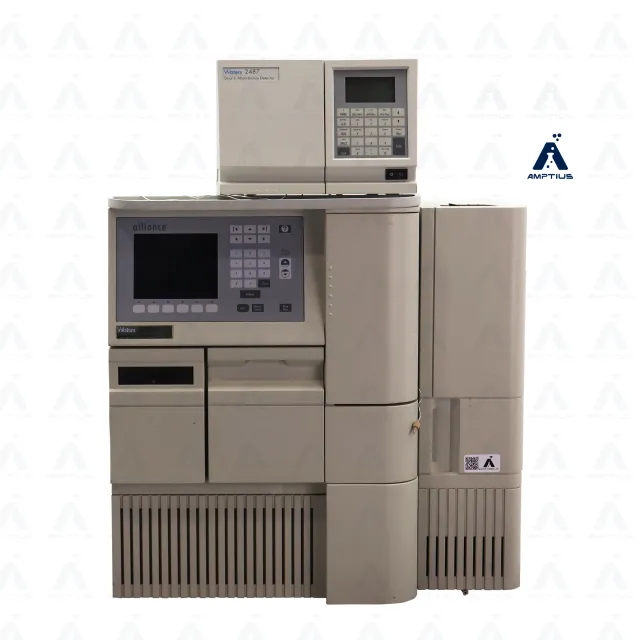 Waters Alliance 2695 HPLC System with 2487 UV-Vis Detector
Waters
Available
Fully Tested and Refurbished
Available
$7,500.00
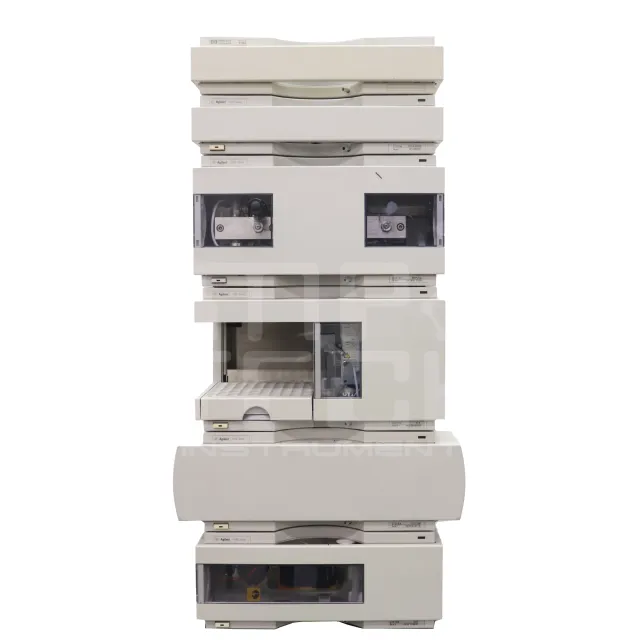 Agilent 1100 HPLC with Diode Array Detector (DAD) and Binary Pump
Agilent
Available
Fully Tested and Refurbished
Available
$12,000.00
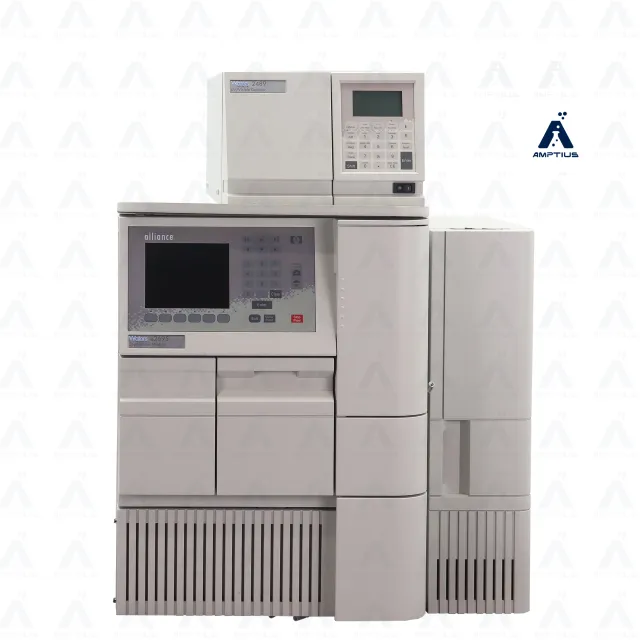 Waters Alliance e2695 HPLC with 2489 UV Visible Detector
Waters Alliance
Available
Fully Tested and Refurbished
Available
$13,000.00
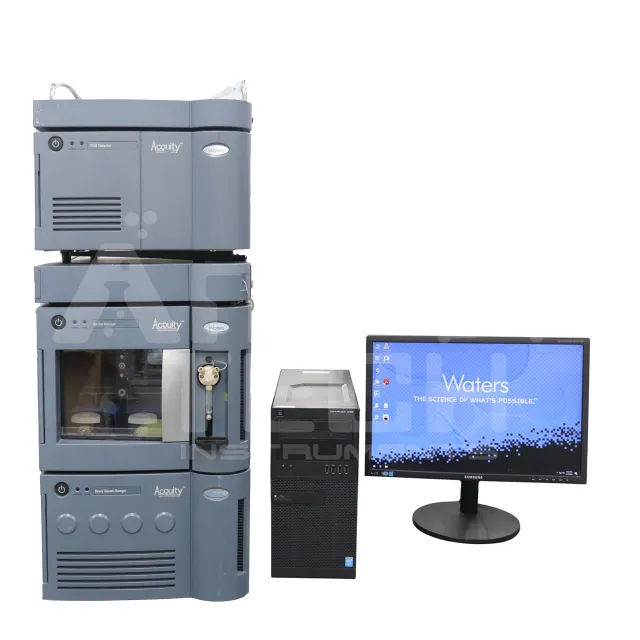 Waters Acquity UPLC System with Binary Solvent Manager (BSM), Sample Manager (SM) and PDA Detector
Waters
Available
Fully Tested and Refurbished
Available
$16,000.00
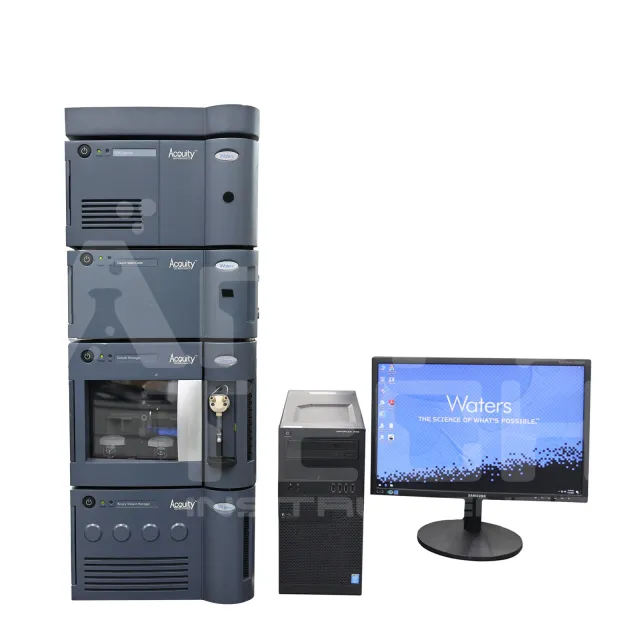 Waters ACQUITY UPLC System with PDA Detector, SM, BSM, CM, and Empower 3 Software
Waters
Available
Fully Tested and Refurbished
Available
$19,900.00
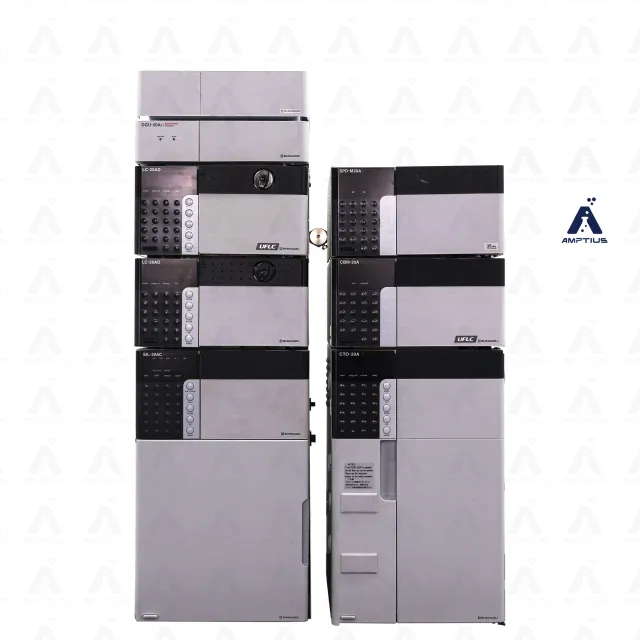 Shimadzu LC-20 AD Prominence HPLC System with PDA Detector
Shimadzu
Available
Fully Tested and Refurbished
Available
$20,000.00
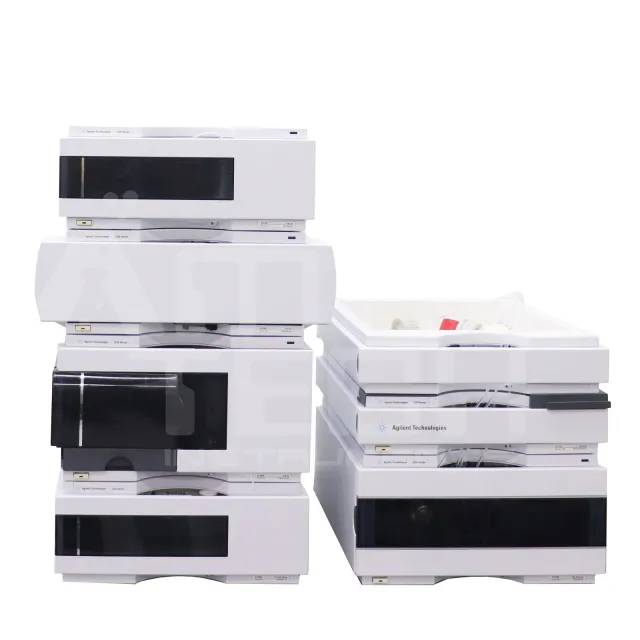 Agilent 1200 HPLC System with Diode Array Detector (DAD) and Binary Pump
Agilent
Available
Fully Tested and Refurbished
Available
$22,000.00
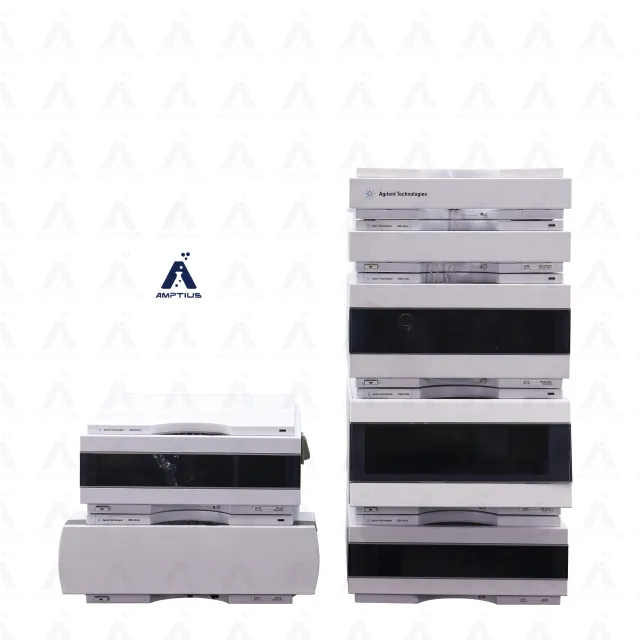 Agilent 1260 Infinity HPLC System with DAD
Agilent
Available
Fully Tested and Refurbished
Available
$32,000.00
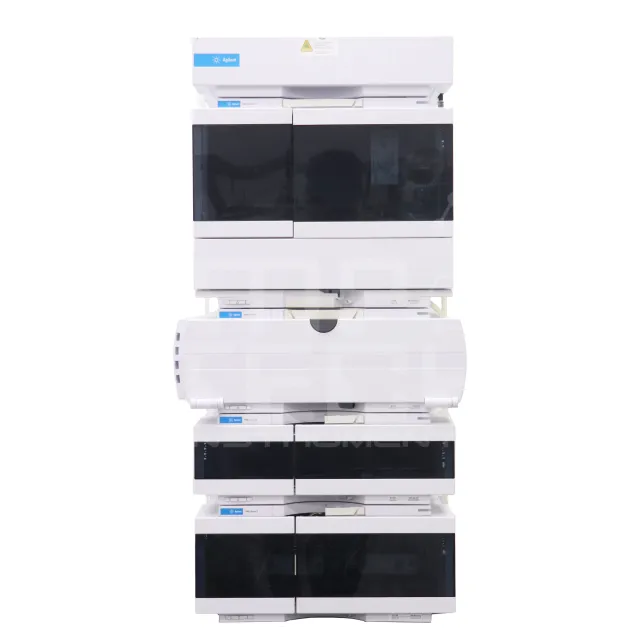 Agilent 1260 Infinity II HPLC System with Diode Array Detector (DAD) and Binary Pump
Agilent
Available
Fully Tested and Refurbished
Available
$40,000.00
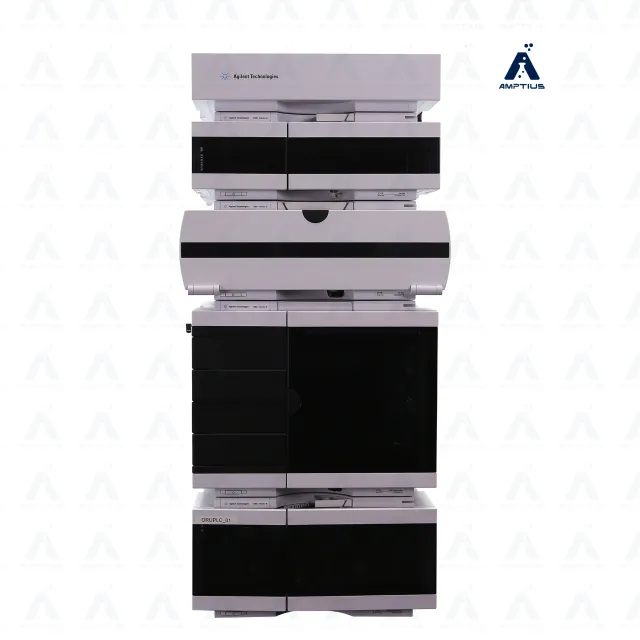 Agilent 1290 Infinity II UHPLC with DAD Detector
Agilent
Available
Fully Tested and Refurbished
Available
$55,000.00
Need identity too? An HPLC cannot tell you what the main peak is. Add mass confirmation with an LC-MS for peptide identity, or see everything a peptide testing lab needs.
Peptide HPLC questions.
Dissolve a weighed sample, inject it on a reversed-phase HPLC with a C18 column, run a water and acetonitrile gradient with 0.1% TFA, and read the UV signal at 210 to 220 nm. Purity is the target peak's area as a percent of all peaks.
210 to 220 nm, where the peptide bond absorbs, so every peptide shows up. 280 nm picks up only peptides with tryptophan or tyrosine and is used as a second check.
A reversed-phase C18 column is the standard. Most peptides, GLP-1 analogues included, run well on 100 to 130 Å columns; wide-pore 300 Å columns help with larger peptides and proteins. C8 can help with very hydrophobic sequences.
TFA pairs with the peptide's charged groups and gives sharp, symmetric peaks. It weakens the signal in a mass spectrometer, so LC-MS methods usually use 0.1% formic acid instead.
Purity is the share of the UV signal from the target peptide. Net peptide content is the share of the powder's weight that is peptide, after water and counter-ions. A vial can be 99% pure and still hold less peptide than its label says.
Yes. They are among the most common HPLCs in QC labs, parts and service are easy to find, and they run peptide purity methods well. Every one we sell is tested in our lab first.
Get an HPLC set up for your peptides.
Tell us the peptides, your sample count and whether you want UV or PDA, HPLC or UHPLC. We will suggest a system and send prices within 48 hours.