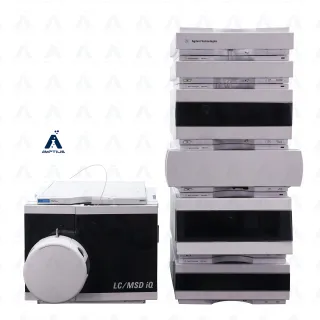
How to Sell Used Lab Equipment: The Real Cost of Auctions, Brokers and Doing It Yourself
Selling an Entire Lab or Laboratory Instruments? Start Here
You're closing a lab. Or you're shutting down a wing. Or you've got a room full of instruments that haven't been turned on in two years and someone finally asked why you're still paying to store them. Whatever the situation, you've got analytical equipment (mass spectrometers, HPLCs, GCs, maybe an entire laboratory) and you need to turn it into cash. This is how laboratory equipment liquidation really works, from someone who has been on the buying side of that table for over twenty years.
Your Three Options for Selling Used Lab Equipment
When it's time to sell used lab equipment, you really only have three legitimate routes: hire an auction house, sell it yourself, or sell it outright to an end-buyer like AMP Tech: a company that will actually purchase, transport, and take ownership of your equipment directly. In the industry, this is called lab asset recovery, and the path you choose determines how much money you actually keep.
On paper, each option sounds reasonable and comes with a number that looks like a win. What nobody explains until you're committed is what each one really costs.
Selling at Auction: The $900K Illusion
An auctioneer walks your floor, does some napkin math, and tells you "We can probably get you $900K for this." Sounds like a massive win, but they won't guarantee that number.
For the next 60 to 90 days, your facility becomes a waiting room. While they catalog equipment, shoot photos, and run their marketing, you're still bleeding: paying your lease, keeping the lights on, covering insurance, covering payroll for staff who are now babysitting a shutdown. That overhead doesn't pause because you signed with an auction house.
Then the auction finally happens. The winning bidder on your $150K LC/MS ghosts and never pays. That lot gets relisted, and relisted items historically sell for less than the original auction. For the items that do sell, you now have random buyers and third-party riggers showing up at odd hours to pull equipment out of your facility. Someone dings a wall. Someone backs a truck into your loading dock. And if one of those strangers falls down the stairs or catches a chemical exposure? That liability is yours.
When the dust settles, the auctioneer takes their 10 to 30 percent. You're left with three months of overhead you can't get back, an empty line item where the LC/MS money should be, and a lab still full of unsold glassware, benches, and freezers that nobody bid on, which you now get to pay a junk crew to haul away.
That $900K projection? After overhead, commissions, no-sales, and disposal costs, you'll be lucky to net half of what they promised. And you burned a quarter just waiting for it.
What About HIPAA and Data Security?
If you're a clinical or research lab, every computer, every workstation, every instrument with a hard drive is a compliance liability. During an auction, your IT staff has to wipe or document every device before strangers walk out the door with them. That's your burden, not the auctioneer's. And if a laptop with patient data or proprietary research walks off during the chaos of post-sale pickup? That's a breach. That's legal exposure. And it happened because you had forty different buyers roaming your facility on different days.
Selling It Yourself: "I'll Just Sell It Myself"
You could try to skip the auction and sell direct: post it on LabX, put it on eBay, have your lab manager chase leads. You'd think that gets you closer to "retail" prices. It doesn't.
A lab manager at a pharma company isn't buying a $60K mass spec from a random listing. Whether it's an Agilent 6545 Q-TOF, a Waters Xevo TQ-S, or a Thermo Fisher Orbitrap, their procurement department won't approve it from an unknown seller. Their compliance team won't sign off. There's a vendor qualification process at every serious lab, and a facility that's three months from closing isn't in it. The buyers who actually pay real money for used Agilent, Waters, Sciex, Shimadzu, and PerkinElmer equipment buy from established refurbishment companies, because they need a warranty, a guaranteed working instrument, and somebody to call at 2pm on a Tuesday when it throws an error code. Can you offer that? For how long?
And even if you find a buyer willing to roll the dice, you still have to decommission a precision instrument with fragile circuit boards and heavy vacuum pumps, source or build proper crating, coordinate freight, arrange insurance, and pray nothing gets damaged in transit. One bad shipment on an LC/MS and you're eating the full loss, plus a furious buyer who wants a refund you already spent.
Meanwhile, every month your staff spends playing equipment salesman is a month they're not running your lab, not publishing, not generating revenue. Their time has a dollar value. And it's a lot higher than whatever you'd save going DIY.
That "market value" spreadsheet your lab manager put together? It's the refurbished price: the price that comes with a warranty, from a company that's been in business for years, with engineers who will answer the phone. Not the price someone pays a closing lab with no warranty, no support, and no guarantee they'll exist next quarter. Those are two very different numbers.
Lab Equipment Brokers: The Broker Trap
Then there are the brokers. They'll call you the week your closure gets announced, sometimes before you've even told your own staff. They sound helpful and fast, and they'll tell you they have a buyer for your Sciex triple quad and they can have a check to you in two weeks.
A broker only wants your high-ticket items. The flagship mass specs, the newer HPLCs, maybe a high-end ICP. They'll cherry-pick the three or four instruments that are easy to flip, negotiate a price that gives them a healthy margin, and leave you with everything else: the 8,000 square feet of freezers, ovens, balances, centrifuges, fume hoods, sample prep equipment, glassware, furniture, and general lab infrastructure that nobody wants to deal with.
The broker made their $15K to $25K skim. You shipped the instruments on your dime. You handled the decommissioning. You assumed the liability. And now you have a facility full of second-tier equipment that you still can't get rid of, except now it's even harder, because the anchor items that made the whole package attractive are gone.
Brokers aren't a solution. They profit from sellers who don't know how the resale market actually works.
What This Looks Like in Real Life
We see this regularly. One recent example captures the whole pattern.
Case Study: A 20,000 Sq Ft Lab. $80K/Month in Overhead. All Funding Pulled.
A multi-million-dollar laboratory startup lost its funding. The facility was 20,000 square feet, a full analytical and clinical operation. We're talking three to four 53-foot trailers worth of equipment: flagship instruments, sample robots, large prep vessels, mixers, freezers, ovens, fume hoods, office furniture, break room contents, sinks: everything you'd find in a serious working lab. Overhead was running $80,000 a month with no revenue coming in.
Two auction houses came in. One projected $2.6 million gross. The other said $1.7 million. Several brokers offered between $300K and $500K for cherry-picked items, with no interest in handling the rest.
We offered $800K. Cash wire. Our engineers on-site in two weeks. Entire facility emptied in seven to ten days. They could turn in their lease that month. Overhead stops immediately.
We provided real-world resale data to back the offer. We were transparent: their equipment would sit in our 16,000 square foot facility for a year or more before it all sold. It was a long play for us. But $800K wired in two weeks, overhead eliminated, lease returned. That was the math.
The board voted 4-3 to go to auction.
The auction took 76 days to catalog, market, and execute. During that time, the facility bled $80K a month. Staff who were supposed to be transitioning out were instead babysitting the cataloging process and managing buyer access.
Post-sale was worse. Dozens of different buyers showed up over two weeks. Employees ended up doing most of the customer management. Several laptops and software license dongles were stolen. The buyer of one high-dollar Orbitrap, the single biggest lot, never paid. Lots of equipment that did sell for $5 or $10 per lot was later abandoned by the buyers because the cost of moving it exceeded what they paid. Trash was left everywhere.
One fume hood was uninstalled incorrectly by a buyer's rigger. They punctured an AC refrigerant line. Nobody noticed until after those people had left. The AC repair cost $22,000.
They had to hire a haul-away crew for the remaining unsold lots, abandoned equipment, and debris. That cost $7,000.
By chasing a $2.6M projection, they netted $734K after six months of work. That's $66K less than our two-week cash offer. And they'll never get those six months back.
| Gross auction | Net after all costs | Total time burned |
|---|---|---|
| $1.3M | $734K | 6 months |
The gross came in at $1.3 million. Not $2.6 million, not even $1.7 million. After the 25% seller's premium, four months of overhead at $80K, the $22K AC repair, and the $7K haul-away, they netted roughly $626K.
The Orbitrap that went unpaid? It was relisted and eventually sold two months later for $108K, roughly half of the original winning bid. Because nobody trusts a relisted lot, especially on instruments where buyers need assurance that it works. That brought the total to approximately $734K after six months.
They could have had $800K and been done half a year earlier.
What to Look for in a Legitimate Lab Equipment Buyer
If you take one thing from this article, let it be this: not all buyers are the same, and the number on the offer sheet is only meaningful if you understand the total cost of each option.
Before you sign anything, check for these.
Green Flags
- They're the end buyer, not a middleman. They have a facility where your equipment goes. They refurbish it. They sell it under their own name with their own warranty. That direct path means they can pay more: there's no second margin being extracted.
- They buy everything, not just the highlights. A real buyout company takes the flagship instruments and the supporting equipment. The freezers, the glassware, the stuff in the back room. If they're only interested in your top three instruments, they're a broker, not a buyer.
- They handle the logistics themselves. Decommissioning, packing, crating, freight: their crew, their trucks, their insurance. You're not coordinating anything. You're handing over keys.
- They give you a firm number before they show up. Not a projection. Not a "let's see what it brings." A written number that you can plan against.
- They have a data security protocol. NIST 800-88 wipe standards, documented chain of custody, certificates for every device. If they can't answer this question immediately and specifically, walk.
- They pay on pickup or wire on shipment. No consignment. No "payment in 60 days." Cash when equipment leaves your facility.
Red Flags
- They only want your high-dollar items. If they're cherry-picking the top three instruments and ignoring everything else, they're a broker. And once those items are gone, nobody else is coming in for the rest.
- They want you to handle shipping. If the buyer isn't managing the logistics, you're assuming all the risk. One damaged instrument is a five- or six-figure loss.
- "We'll list it for you" or "consignment." This means they don't want to buy it. They want to use your capital while they look for a buyer at their own pace. You're financing their inventory and getting paid last.
- They won't put the price in writing. Verbal offers aren't offers. If someone won't commit a number to paper, they're anchoring you to a low expectation while they shop for their own deal.
- No facility, no warehouse, no staff. Ask where your equipment is going. If they can't show you a physical facility with engineers and a warehouse, they're flipping to someone who can, and you're paying for that extra hop.
Why Labs Sell to AMP Tech
We're not brokers. We're not auctioneers. We're a refurbishment facility staffed by engineers who understand these instruments inside and out. Every green flag above is simply how AMP Tech works.
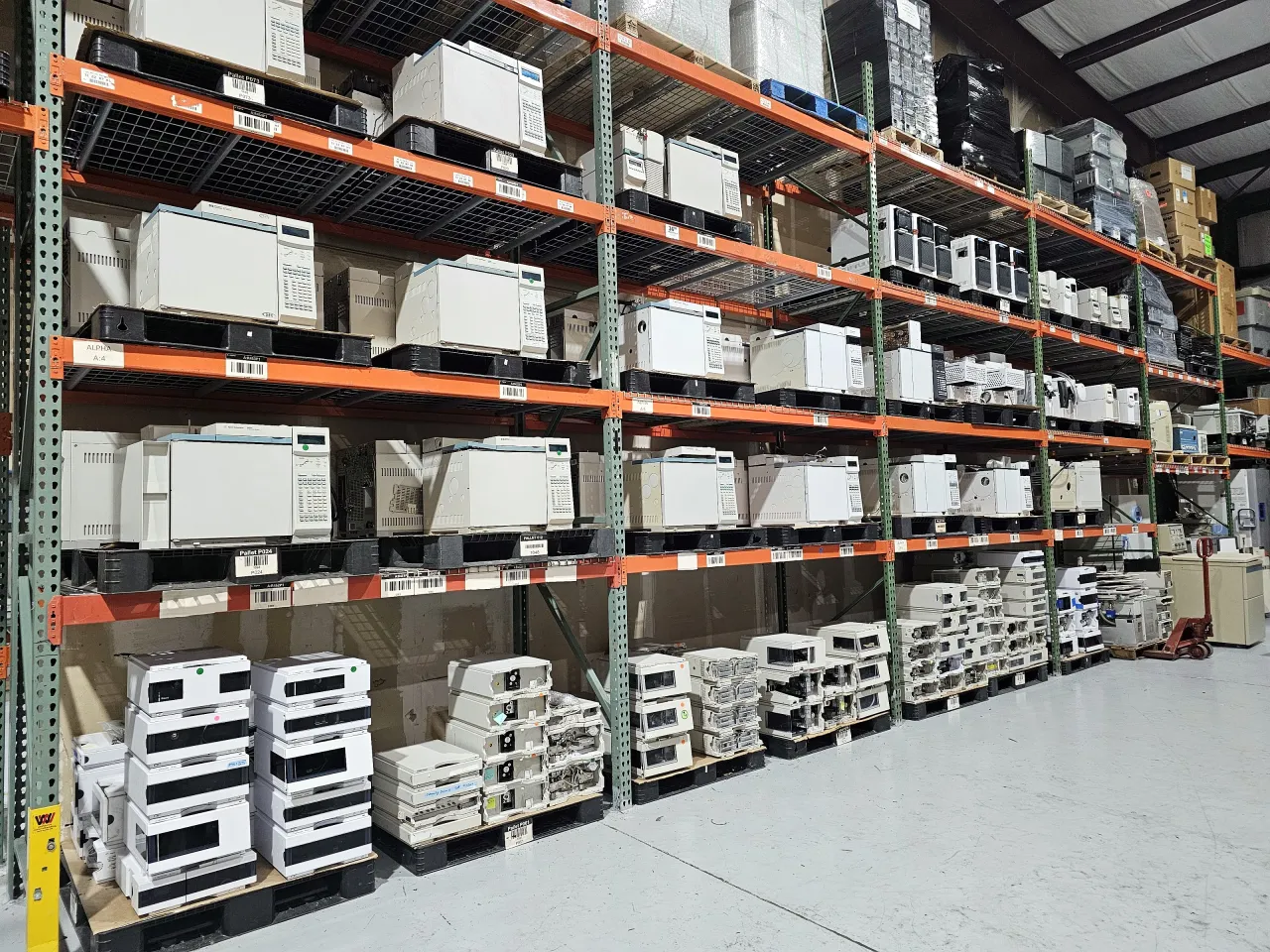
- We're the end buyer. We buy outright. We hold the inventory, provide the warranties, and take on the liability, so you get cash now without playing salesman. Your equipment comes to our 16,000 square foot facility in Central Florida, where we refurbish it and sell it under our own name with our own warranty.
- From a single HPLC to an entire facility, anywhere in the US. We buy single instruments and entire labs, and we have established logistics networks coast to coast.
- We take everything. If you're turning in the lease and need the space empty, we take the high-value systems and the supporting equipment as a package: benches, freezers, glassware, furniture. The one condition: the whole deal is ours. No cherry-picking machines out to others.
- Our engineers do the hard part. Decommissioning, decontamination, packing, crating and freight: our people, our trucks, our insurance. That's our advantage.
- A firm number in writing. You get a firm, no-obligation offer within 48 hours.
- Your data, secured. Storage media are wiped or destroyed in accordance with NIST 800-88, on site or at our facility, whichever you require, with full documentation for your compliance records and a strict chain of custody for every device.
- Paid before anything moves. Nothing leaves your site until you've been paid.
- Trading up? Put your equipment's value toward a certified instrument from AMP Tech.
How Selling to AMP Tech Works
- Contact us. Call, email, or send us your list: photos, a spreadsheet, even just a description. Whatever you have works.
- We quote. You get a firm, no-obligation offer within 48 hours. We'll ask about model numbers, condition, and quantities, and we'll move fast.
- We show up. It depends on your schedule and the scope of the purchase. Small jobs can be picked up in as little as a couple of days; a large, multi-truck job usually has our crew on site within a week or two.
- You get paid, and the space is yours again. Our team handles decommissioning, packing, and removal, and nothing leaves your site until you're paid.
What to Have Ready When You Call
You don't need a perfect inventory to get started. Any legitimate buyer can work with whatever you have. But the more detail you provide upfront, the faster and more accurate the quote.
- A list of instruments, even a rough one. Manufacturer, model number, and condition if you know it. A spreadsheet is ideal, but a phone call describing the situation works too.
- Photos. Wide shots of the lab, close-ups of nameplates and model tags. Camera phone is fine. This gives a buyer 80% of what they need to start building a quote.
- Your timeline. When does the lease end? Is there a board decision date? A funding cliff? The more a buyer understands about your urgency, the better they can structure the logistics.
- Access details. Loading dock? Elevator? Second floor? These things affect the decommissioning plan and the quote.
Auction vs. Broker vs. DIY vs. AMP Tech
| Auction | Sell Yourself | Broker | AMP Tech | |
|---|---|---|---|---|
| Timeline | 3–6 months | Months, if ever | 2–4 weeks (partial) | Days to weeks |
| What they take | What sells | Whatever you list | Cherry picks only | Everything |
| Revenue certainty | Gamble | Unknown | Partial | Guaranteed |
| Ongoing overhead | You pay it | You pay it | You pay it | Stops immediately |
| Logistics | Buyer's problem | Your problem | You ship | Fully handled |
| Leftover equipment | Your problem | Your problem | Your problem | We take it all |
| Data security | Not addressed | Not addressed | Not addressed | NIST 800-88 |
| Commission / fees | 10–30% | Platform fees | Their margin | $0 |
The Best Way to Sell Used Lab Equipment
The biggest number on paper is rarely the biggest number in your bank account. The auction's projection, the lab manager's spreadsheet, the broker's quick offer: they all look great in a board presentation. But none of them account for overhead, logistics, liability, no-sales, disposal, or the opportunity cost of spending six months managing a liquidation instead of moving on to whatever comes next.
Every month you spend managing a liquidation is another month of overhead on a decision you've already made.
AMP Tech has been buying laboratory equipment for over two decades: hundreds of labs from all over the nation. We operate out of a 16,000 square foot facility in Central Florida. We have the warehouse shelves, the engineers, and the capital to sit on your equipment for as long as it takes to resell it. That's our job, not yours. We offer fair pricing because we understand the real economics of what your equipment is worth, what it costs to refurbish, and what it will eventually sell for. We're not guessing.
Selling Lab Equipment to AMP Tech: Common Questions
Who buys used lab equipment?
Auction houses, brokers, other labs through listing sites, and end-buyers like AMP Tech. AMP Tech buys outright and handles everything, from a single instrument to an entire lab, anywhere in the US.
What's the best place to sell used lab equipment?
For most labs, an end-buyer. You get a firm number in writing, no commission, no strangers on your site, and you're paid before anything leaves. That's how AMP Tech works.
Do you buy single instruments or only whole labs?
Both. AMP Tech buys single instruments and entire labs.
Where do you buy lab equipment?
Anywhere in the US.
How fast can you clear out a lab?
It depends on your schedule and the scope of the purchase. Small jobs can be picked up in as little as a couple of days. A large, multi-truck job usually has our crew on site within a week or two.
Will you take everything, including furniture, freezers and glassware?
If you need the space cleared, for example to turn in the lease, yes. We take everything, as long as we're buying the whole lab and nothing is cherry-picked out to others.
Do we need to decontaminate or decommission the equipment first?
No. Our engineers handle decommissioning and decontamination. That's our advantage.
How and when do we get paid?
Nothing leaves your site until you've been paid. Your written offer spells out the terms.
What happens to the data on instrument computers?
Storage media are wiped or destroyed in accordance with NIST 800-88, on site or at our facility, whichever you require, with full documentation for your compliance records.
Are you insured?
Yes. AMP Tech is insured for the work on your site and for transport.
Can we trade in equipment toward a refurbished instrument?
Yes. Put the value of your equipment toward a certified instrument from AMP Tech.
Which brands do you buy?
Mostly analytical systems from Agilent, Waters, Thermo Fisher, PerkinElmer and other major makers. We'll take supporting equipment as part of a larger purchase, but a trip for a few shakers and a freezer on their own doesn't make sense for anyone.
About the author
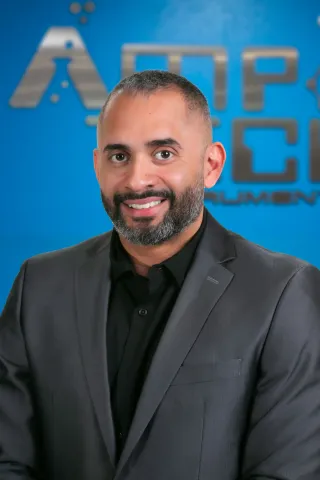
Immanuel Perez
Founder & CEO, AMP Tech Instruments
Manny has spent over two decades in the analytical instrument industry buying, refurbishing, and reselling mass spectrometers, HPLCs, GCs, and complete laboratory facilities. He founded AMP Tech Instruments in Central Florida, where his team certifies and services equipment from Agilent, Waters, Sciex, Shimadzu, Thermo Fisher, and PerkinElmer. When he's not on the road evaluating a lab, he's in the warehouse rebuilding one.